New India Labour Codes 2025: what foreign employers must know
India's biggest labour law overhaul in decades is no longer a "maybe next year" story. Four Labour Codes took effect on November 21, 2025, according to the Ministry of Labour and Employment's official gazette notification. Twenty-nine separate statutes, some dating back to the 1940s, are now consolidated into four codes that change how wages are defined, how fixed-term employment works, when retrenchment requires government permission, how leave and working hours are structured, and how social s

ByNilesh Parwani / April 22, 2026 / 15 min read
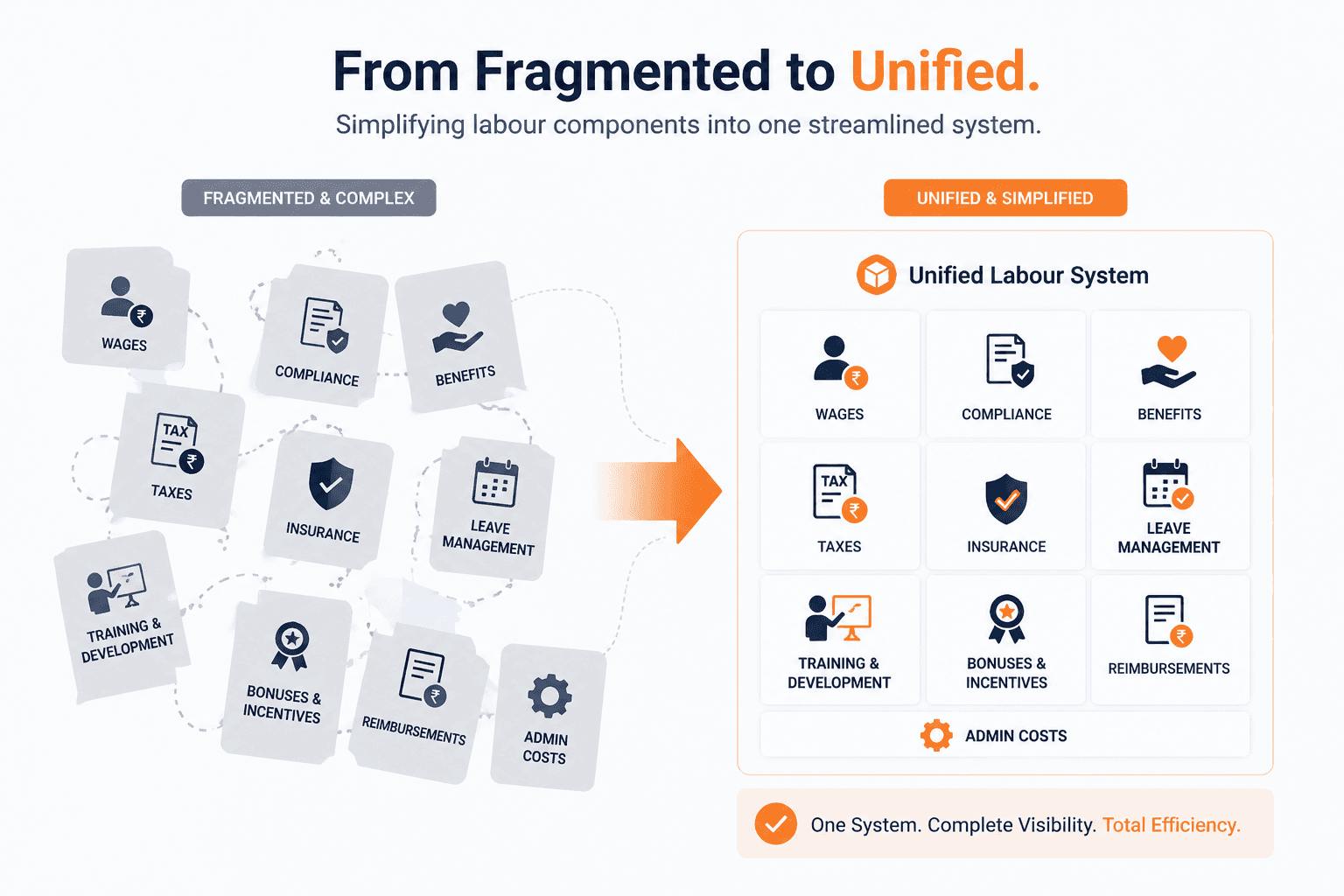
- India Labour Codes 2025: master summary
- What changed on November 21, 2025?
- The four codes now in force
- Why this matters
- The 2026 reality
- The 300-worker threshold: what it really means
- What changed
- Why foreign employers care
- What not to say
- Best editorial framing
- Fixed-term employment: one of the most important changes for global employers
- Why fixed-term employment matters now
- What fixed-term employment changes in practice
- Why foreign employers should pay attention
- Link to EOR opportunity
- Wages, CTC, and payroll structure have changed too
- The wage definition issue
- Why this affects foreign employers directly
- Why CTC math may need redesign
- Best practical takeaway
- Leave, working hours, and HR policy changes
- Why policy review is required
- What foreign employers should expect
- Why this is tricky in India
- Social security and worker coverage: broader implications
- Social Security Code impact
- Why worker vs employee classification matters
- What foreign employers should do
- What foreign employers need to review right now
- Employment contracts
- Payroll and compensation structures
- HR policies
- Workforce strategy
- Internal ownership
- What this means for EOR, payroll outsourcing, and entity setup
- Why EOR becomes more valuable
- Why payroll outsourcing matters more too
- Why entity setup is not the only complexity
- What foreign employers should do in 2026
India's biggest labour law overhaul in decades is no longer a "maybe next year" story. Four Labour Codes took effect on November 21, 2025, according to the Ministry of Labour and Employment's official gazette notification. Twenty-nine separate statutes, some dating back to the 1940s, are now consolidated into four codes that change how wages are defined, how fixed-term employment works, when retrenchment requires government permission, how leave and working hours are structured, and how social security coverage applies.
If you're a foreign company hiring employees in India, or planning to, every one of those changes hits your operating model directly. Not theoretically. In payroll math, contract language, HR policy design, and workforce strategy. The 300-worker threshold alone is reshaping how companies think about scaling teams. And the new wage definition could force a redesign of compensation structures that have been running the same way for years.
This guide breaks down each code's practical impact for foreign employers, what you need to review right now, and where an Employer of Record fits during this transition. Because the codes are live, but the interpretation is still catching up.
India Labour Codes 2025: master summary
Sources: Ministry of Labour and Employment gazette notification (November 2025), Code on Wages 2019, Industrial Relations Code 2020, Code on Social Security 2020, Occupational Safety Health and Working Conditions Code 2020.
What changed on November 21, 2025?
The four codes now in force
Here is what replaced what:
Code on Wages, 2019 — consolidates the Payment of Wages Act (1936), Minimum Wages Act (1948), Payment of Bonus Act (1965), and Equal Remuneration Act (1976). Introduces a uniform wage definition and sets the floor for basic pay as a proportion of total remuneration.
Industrial Relations Code, 2020 — replaces the Industrial Disputes Act (1947), Trade Unions Act (1926), and Industrial Employment (Standing Orders) Act (1946). Brings in the 300-worker threshold, formalizes fixed-term employment, and restructures the industrial dispute resolution process.
Code on Social Security, 2020 merges nine laws including the Employees' Provident Fund Act, Employees' State Insurance Act, Payment of Gratuity Act, Maternity Benefit Act, and the Employees' Compensation Act. Expands social security coverage categories and introduces provisions for gig and platform workers.
Occupational Safety, Health and Working Conditions Code, 2020 consolidates 13 laws including the Factories Act (1948), Mines Act (1952), and various establishment-specific safety regulations. Updates working-hours provisions, leave entitlements, and workplace safety requirements.
Why this matters
Twenty-nine laws. Some of them nearly 80 years old. Replaced by four codes with updated definitions, thresholds, and compliance structures. That is not a minor amendment. It is a fundamental reorganization of how Indian employment law works.
For foreign employers, the significance is practical, not academic. The wage definition change alone affects every payroll calculation you run. The fixed-term employment formalization opens up hiring models that were previously ambiguous. The social security expansion changes how you classify workers and contractors. And the leave and working-hours updates mean your HR policies may already be out of date.
The 2026 reality
Here is something that does not get enough attention: the codes are effective, but rule-making is still evolving. Central rules have been notified, but state-level rules, implementation guidelines, and practical interpretation are still developing. The Ministry of Labour has been issuing FAQs, handbooks, and clarifications through the Press Information Bureau throughout early 2026.
What this means in practice: you cannot wait for "final clarity" before acting. The codes are law. But you also cannot treat every provision as settled interpretation. Companies hiring employees in India right now need to design compliance around the codes as written while staying ready to adapt as state rules and administrative guidance catch up. That is exactly the kind of environment where having local compliance expertise on your side pays off.
The 300-worker threshold: what it really means
What changed
Under the old Industrial Disputes Act, establishments with 100 or more workers needed prior government permission before retrenching employees or closing operations. The Industrial Relations Code raised that threshold to 300 workers.
Similarly, the requirement for establishments to maintain standing orders (formal rules governing conditions of employment) previously applied to establishments with 50 or more workers under the Industrial Employment (Standing Orders) Act. The new code raises that to 300.
Why foreign employers care
If you're building a team in India that's under 300 people (and most foreign companies hiring through EOR or even through their own entities are), the threshold change affects your long-term planning. It changes the compliance posture for team growth, restructuring flexibility, and how you think about workforce scaling.
According to KPMG's rollout summary of the Labour Code changes, the revised threshold gives employers more operational flexibility for workforce adjustments in mid-sized establishments. For a foreign company growing a team from 20 to 150 people, the new thresholds mean fewer administrative obligations during the growth phase compared to the old framework.
What not to say
We need to be very clear here because this gets misunderstood. The 300-worker threshold does NOT mean "you can freely fire anyone if your team is under 300 people."
That is flat-out wrong. Indian employment law still requires proper documentation, notice periods, and severance (retrenchment compensation) for any termination. The change is about whether you need prior government approval for retrenchment, not whether employment protections exist. Every employee in India has rights under their employment contract, applicable labour codes, and (depending on state) local rules. Due process still applies.
Best editorial framing
The accurate way to understand this: the Industrial Relations Code changes how some retrenchment and standing-order obligations apply based on establishment size. It does NOT eliminate due process, documentation requirements, or worker protection. Foreign employers should view the 300-worker threshold as a planning consideration for growth strategy, not as a green light for casual terminations.
If you're building an India team through an Employer of Record, the EOR manages these compliance obligations regardless of threshold. That removes the guesswork.
Fixed-term employment: one of the most important changes for global employers
Why fixed-term employment matters now
Before the Labour Codes, fixed-term employment in India existed in a gray area. Some states allowed it, others did not. The legal framework was inconsistent, and employers who tried to use fixed-term contracts in the wrong jurisdiction risked non-compliance.
The Industrial Relations Code changed that. Fixed-term employment is now formally recognized across India with a defined framework. EY's post-rollout employer guidance, published in their "India Labour Code Implementation" advisory, specifically recommended that employers reassess hiring models, employment contracts, and fixed-term arrangements following the November 2025 rollout.
What fixed-term employment changes in practice
Fixed-term employees are now entitled to the same benefits as permanent employees, including wages, leave, hours, and social security contributions. The difference is the contract duration, which is defined upfront for a specific period or project.
For GCCs, startups, and foreign companies hiring in India, this opens up a cleaner route for project-based hiring. Need a team of five engineers for a 12-month product build? Fixed-term contracts now have a clear legal framework. Need to hire specialists for a defined migration project or regulatory implementation? Same framework applies.
But the contracts need to be properly drafted. Fixed-term employment is not a workaround for avoiding benefits, and the equal-treatment requirement means payroll costs are similar to permanent employment. The difference is in the contract's end date and the flexibility that provides.
Why foreign employers should pay attention
The value for foreign employers is real but nuanced. You get more flexibility in how you structure hiring for time-bound work. But you do not get a shortcut around labour obligations. Careful classification is needed to ensure fixed-term arrangements are genuine (tied to a specific project or duration) rather than an attempt to sidestep permanent-employment protections.
EY's guidance was pointed on this: companies that treat fixed-term employment as a loophole rather than a legitimate hiring model will face compliance risk. The codes protect fixed-term workers specifically to prevent misuse.
Link to EOR opportunity
Foreign employers exploring fixed-term hiring in India often find the contract drafting, benefits parity calculations, and compliance documentation more complex than expected. This is one of the areas where an EOR or local employment partner earns its fee. Getting the contract language wrong on a fixed-term arrangement creates more risk than getting it wrong on a standard permanent hire, because the termination and benefits provisions are different.
Kaamwork handles fixed-term contract structuring as part of its standard EOR service at $599/month per employee, including benefits parity compliance and proper documentation.
Wages, CTC, and payroll structure have changed too
The wage definition issue
The Code on Wages introduced a uniform definition of "wages" that applies across all four codes. Under this definition, basic pay must constitute at least 50% of total remuneration. Allowances exceeding 50% of total remuneration get reclassified as wages for statutory-contribution purposes.
This was one of the most discussed provisions in the months before the codes took effect, according to employer alerts from KPMG and EY. And for good reason. It changes payroll math.
Why this affects foreign employers directly
If your India employees have a CTC structure where basic pay is, say, 30% or 35% of total remuneration (which was common under the old framework), the new wage definition means their provident fund contributions, gratuity calculations, leave encashment, and bonus calculations are all computed on a higher base.
Source: Wage-definition provisions per Code on Wages 2019; PF contribution rates per EPFO schedule.
This is not just a legal issue. It is a payroll-cost issue. Your per-employee cost in India may increase even if you don't change the CTC number, because statutory contributions are calculated on a larger base.
Why CTC math may need redesign
The Economic Times reported in late 2025 and early 2026 that many firms reworked pay structures in anticipation of and following the code rollout. The reason: companies that do not adjust their CTC breakdowns risk either underpaying statutory contributions (compliance risk) or surprising employees with lower take-home pay (retention risk).
Neither outcome is good. For foreign employers who designed India salary structures years ago and have not revisited them, the Labour Codes are a forcing function for a payroll review.
Best practical takeaway
Do not copy old salary structures onto new hires. Review your CTC design. Check your basic-pay proportion against the 50% floor. Re-run statutory contribution calculations with your payroll team or EOR provider. And do it now, not when an audit forces you to.
If you're running India payroll through an EOR, ask your provider how they've adjusted for the new wage definition. Any competent provider made these changes before or immediately after November 21, 2025.
Leave, working hours, and HR policy changes
Why policy review is required
EY's post-rollout guidance explicitly recommended that employers update HR and employee-relations policies to align with the new framework. That includes leave entitlements, working-hours policies, overtime provisions, and attendance rules.
The Occupational Safety, Health and Working Conditions Code updated several provisions that affect daily HR operations. Working-hour limits, leave accrual formulas, overtime calculation methods, and rest-day provisions all changed from their previous statutory basis.
What foreign employers should expect
Leave policy harmonization is one of the biggest operational changes. Under the old framework, different laws governed different types of leave (earned leave, casual leave, sick leave) with different accrual rates and carry-forward rules depending on the establishment type and state. The new codes establish a more standardized framework, but state-level variation in implementation means your leave policy still cannot be one-size-fits-all.
Your employee handbook language needs to match the new statutory framework. Working-time provisions, attendance tracking, overtime eligibility and calculation, and leave accrual should all reflect the codes as implemented in each state where you have employees. For a foreign company with team members in Bangalore, Hyderabad, and Pune, that could mean three slightly different leave configurations.
Why this is tricky in India
The central framework is new. State practice still matters. And states have been rolling out their own implementation rules at different speeds.
For foreign employers managing this through their own entity, staying current on each state's implementation status requires dedicated compliance resources. For those using an EOR, this is exactly the kind of operational complexity that justifies the model. An EOR handling payroll compliance in India should already have updated leave policies, working-time calculations, and attendance frameworks for each state where they operate.
Social security and worker coverage: broader implications
Social Security Code impact
The Code on Social Security expanded coverage definitions beyond the old EPF and ESI frameworks. It introduced provisions for gig workers and platform workers, expanded the categories of establishments covered by social security requirements, and updated the frameworks for provident fund, insurance, gratuity, and maternity benefits.
For foreign employers, the expanded coverage means more workers may fall under mandatory social security obligations. The old approach of classifying certain roles as "consultants" or "independent contractors" to avoid EPF/ESI contributions is riskier under the new code. The definitions are broader. The coverage net is wider.
Why worker vs employee classification matters
This is where payroll exposure and benefits obligations get complicated. Under the old framework, the distinction between an "employee" (covered by EPF, ESI, gratuity) and a "contractor" or "consultant" (potentially outside mandatory coverage) was fuzzy enough that many companies operated in gray areas.
The Social Security Code tightened those definitions. If someone works for you regularly, on your tools, under your direction, for an extended period, the argument that they're an "independent contractor" gets harder to sustain. The compliance risk is not just back-payment of PF and ESI contributions. It includes interest, penalties, and potential legal proceedings.
For foreign companies using a mix of contractors and full-time employees in India, the new code should trigger a review of every contractor arrangement. Which contractors are genuinely independent? Which ones are functionally employees who happen to be on a different contract type?
What foreign employers should do
Review employee categories across your India workforce. Audit contractor arrangements against the new Social Security Code definitions. Map your workforce by role type, engagement duration, and level of control. Any arrangement that looks like employment but is structured as contracting needs a compliance review.
If you're already using an EOR for some team members but managing others as contractors, now is the time to evaluate whether those contractor arrangements still hold up under the new framework. Converting contractors to employees in India is a process Kaamwork handles routinely, actually closer to a standard service offering than a special project at this point.
What foreign employers need to review right now
This is the section that matters most. The Labour Codes are law. Here is what needs to change in your India hiring operations.
Employment contracts
Review every active employment contract in India. Check permanent vs. fixed-term classification. Ensure role definitions match the work being performed. Update termination language to reflect the new Industrial Relations Code provisions. Verify that benefits wording aligns with the Social Security Code's expanded definitions.
If you're hiring new employees in India, do not use pre-2025 contract templates. The legal framework they were built on has been replaced.
Payroll and compensation structures
Run your CTC structures against the new wage definition. Check whether basic pay meets the 50% floor. Recalculate PF contributions, gratuity provisioning, and leave encashment on the adjusted wage base. Verify that your payroll system or provider has updated its calculation logic.
According to EY's employer guidance, companies should "review compensation structures to align with the uniform wage definition and assess the impact on total employer cost." That is not optional advice. It is a compliance requirement.
HR policies
Update leave policies to match the new framework. Review working-hours provisions. Update attendance and overtime policies. Ensure employee classification (permanent, fixed-term, contractor) is documented correctly and defensible under the new codes.
Check your employee handbook. If it references the Factories Act, the Payment of Wages Act, or the Industrial Disputes Act by name, those references are now outdated. The handbook should reference the applicable Labour Code provisions.
Workforce strategy
The Labour Codes affect strategic decisions, not just compliance paperwork. If you're choosing between EOR and entity setup, the compliance burden of managing Labour Code transition through your own entity is heavier than it was 12 months ago. If you're using a mix of contractors and employees, the Social Security Code's expanded definitions change the risk profile of that model.
Think about growth planning around thresholds. If your India team is approaching 300 people, the standing-orders and retrenchment provisions apply differently above that line. Plan accordingly.
Internal ownership
Someone in your organization needs to own this review. Not "we'll get to it when we have time." Assign clear ownership across HR (policies, handbook, employee classification), finance and payroll (CTC structures, contribution calculations, employer-cost modeling), legal (contract review, compliance assessment), and your local partner or EOR (execution, state-specific implementation, ongoing monitoring).
This is not a quarterly project. It is a now project.
What this means for EOR, payroll outsourcing, and entity setup
Why EOR becomes more valuable
During any regulatory transition, local expertise becomes more valuable, not less. The Labour Codes are effective, but interpretation is evolving. State rules are still being notified. Practical application differs from textbook provisions.
EY and KPMG both issued guidance in late 2025 and early 2026 recommending that employers "prepare for compliance changes immediately" and "engage local experts to navigate the transition period." For foreign employers without deep India employment-law expertise (which is most foreign employers), an EOR absorbs the compliance complexity.
The EOR model means your India payroll, employment contracts, leave policies, and worker classification are managed by a team that has already adapted to the new codes. You don't need to hire an India employment lawyer, a payroll compliance specialist, and an HR policy consultant separately. That is all built into the service.
Why payroll outsourcing matters more too
Even if you have your own entity in India, the payroll calculation changes are material. The new wage definition affects every deduction, every contribution, every tax calculation. Your payroll provider needs to have updated its logic. If you're running payroll in-house, your team needs to understand the new wage definition, contribution formulas, and state-specific variations.
For entity owners using India payroll outsourcing, the Labour Codes make it more important than ever that your provider has deep compliance knowledge, not just software that runs calculations. The interpretation layer matters.
Why entity setup is not the only complexity
Here is something foreign employers often miss. Having an entity in India does not solve Labour Code execution. It just means the compliance burden sits on you instead of on an EOR.
The real work is compliance design: how you structure employment contracts, how you calculate payroll, how you design leave policies, how you classify workers, and how you stay current as state rules evolve. That work exists whether you operate through your own entity or through an EOR. The difference is who does it.
With an EOR, that work is done by a team that does it for hundreds of employers across multiple states. With your own entity, you're building that capability from scratch. For most foreign companies with fewer than 50 people in India, the EOR model is not just cheaper. It is better.
What foreign employers should do in 2026
The biggest mistake you can make right now is treating the Labour Codes as a one-time headline. "Oh, India updated its labour laws. Noted." And then doing nothing.
These codes are not a news story. They are an operating-system change for India employment. They affect contracts, payroll, leave, classification, workforce planning, and long-term India hiring strategy. Every month you run India payroll without reviewing your structures against the new codes is a month of accumulating compliance risk.
Respond with a structured review. Audit your employment contracts. Recalculate your CTC structures. Update your HR policies. Review your contractor arrangements. And decide whether your current India employment infrastructure (entity, EOR, payroll provider, or some combination) is equipped to handle the transition.
If you're not sure where to start, that is actually the clearest signal that you need local support. Kaamwork handles all Labour Code compliance as part of its standard EOR service at $599/month per employee, including contract structuring, payroll calculations on the new wage definition, leave policy design, and worker classification under the new codes. You can also start a conversation directly.
The codes are live. The transition is happening. The only question is whether you are adapting proactively or waiting for a compliance issue to force your hand.
This article is for informational purposes only and does not constitute legal advice. India's Labour Codes are subject to state-level rules and ongoing interpretation. Consult qualified legal counsel or an India employment compliance specialist for advice specific to your situation. Sources: Ministry of Labour and Employment gazette notification (November 2025), EY India Labour Code Implementation Advisory (2025-2026), KPMG India Labour Code Rollout Summary (2025), Economic Times reporting on pay restructuring (2025-2026), Press Information Bureau / Ministry of Labour handbook and FAQ publications (2025-2026), EPFO and ESIC contribution schedules, Code on Wages 2019, Industrial Relations Code 2020, Code on Social Security 2020, Occupational Safety Health and Working Conditions Code 2020.
Share this article

Founder & CEO | Kaam.Work
Nilesh Parwani, a Kelley School BBA graduate, worked at UBS and Warburg Pincus before founding PrintBell (acquired by Cimpress). In 2020, he launched kaam.work, a remote work platform focused on flexible talent and distributed teams.