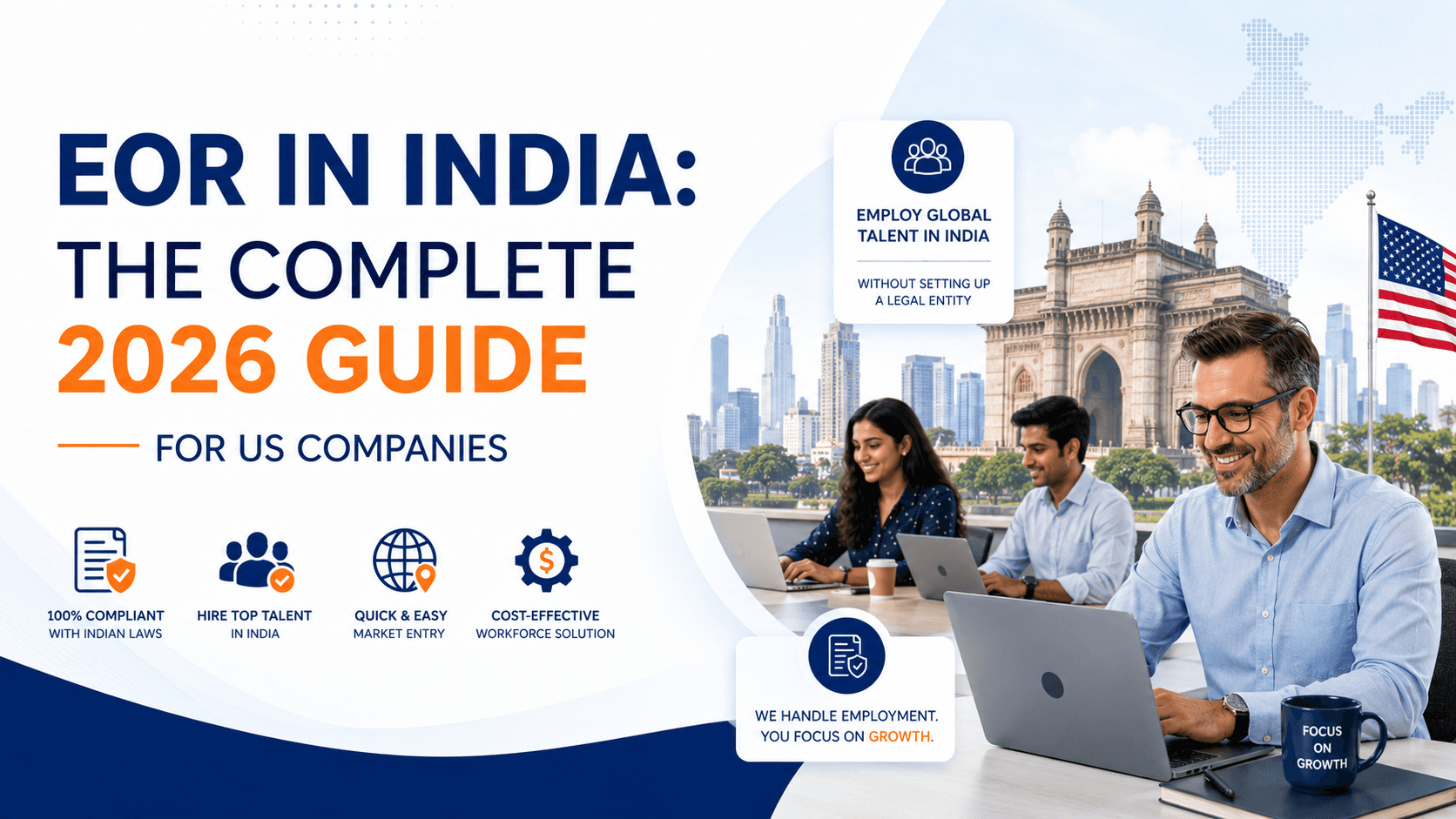
EOR in India: The Complete 2026 Guide for US Companies
Planning to expand into India? This complete guide explains how an EOR in India enables US companies to hire in India without an entity, manage India payroll compliance, and build compliant teams quickly.

ByNilesh Parwani / June 29, 2026 / 9 min read
- Introduction
- What Is an Employer of Record (EOR)?
- EOR vs. PEO: What Is the Difference?
- Why US Companies Are Hiring in India
- How EOR in India Works: The Kaamwork Process
- EOR vs. Setting Up a Legal Entity in India
- India Payroll and Compliance: What You Need to Know
- What Makes Kaamwork Different from Standard EOR Providers
- Real Companies, Real Teams
- Common Questions About EOR in India
Introduction
Hiring top-tier engineers, product managers, and data professionals in the United States has become one of the most expensive and competitive exercises a growing company faces. Salaries are high, competition is fierce, and the time it takes to close a single senior hire can run into months.
India offers a credible alternative. It has one of the largest and youngest talent pools in the world, strong English fluency, and deep expertise across software engineering, data science, product management, and more. For US companies, the question is not whether India makes sense. The question is how to hire there without spending six months on legal paperwork.
That is where EOR in India comes in.
An Employer of Record, or EOR, lets you hire full-time employees in India without setting up a local legal entity. The EOR is the legal employer on paper. You stay in control of the work.
This guide covers everything a US company needs to know: what an India EOR actually does, how the process works, what compliance looks like, how the costs compare, and what makes Kaamwork different from standard EOR providers.
What Is an Employer of Record (EOR)?
An Employer of Record is a company that legally employs workers on your behalf in a country where you do not have a legal entity.
The EOR signs the employment contract, runs payroll, deducts taxes, and makes sure everything stays compliant with local labor law. You stay in control of everything else, who you hire, what they work on, how they're evaluated, and what they earn. Performance reviews, goal-setting, promotions, and exits all remain your call.
This model is sometimes confused with outsourcing. The two are very different. Outsourcing transfers control of a function or deliverable to a third party. An EOR transfers only the legal and administrative employment responsibility. Your team is still your team.
EOR vs. PEO: What Is the Difference?
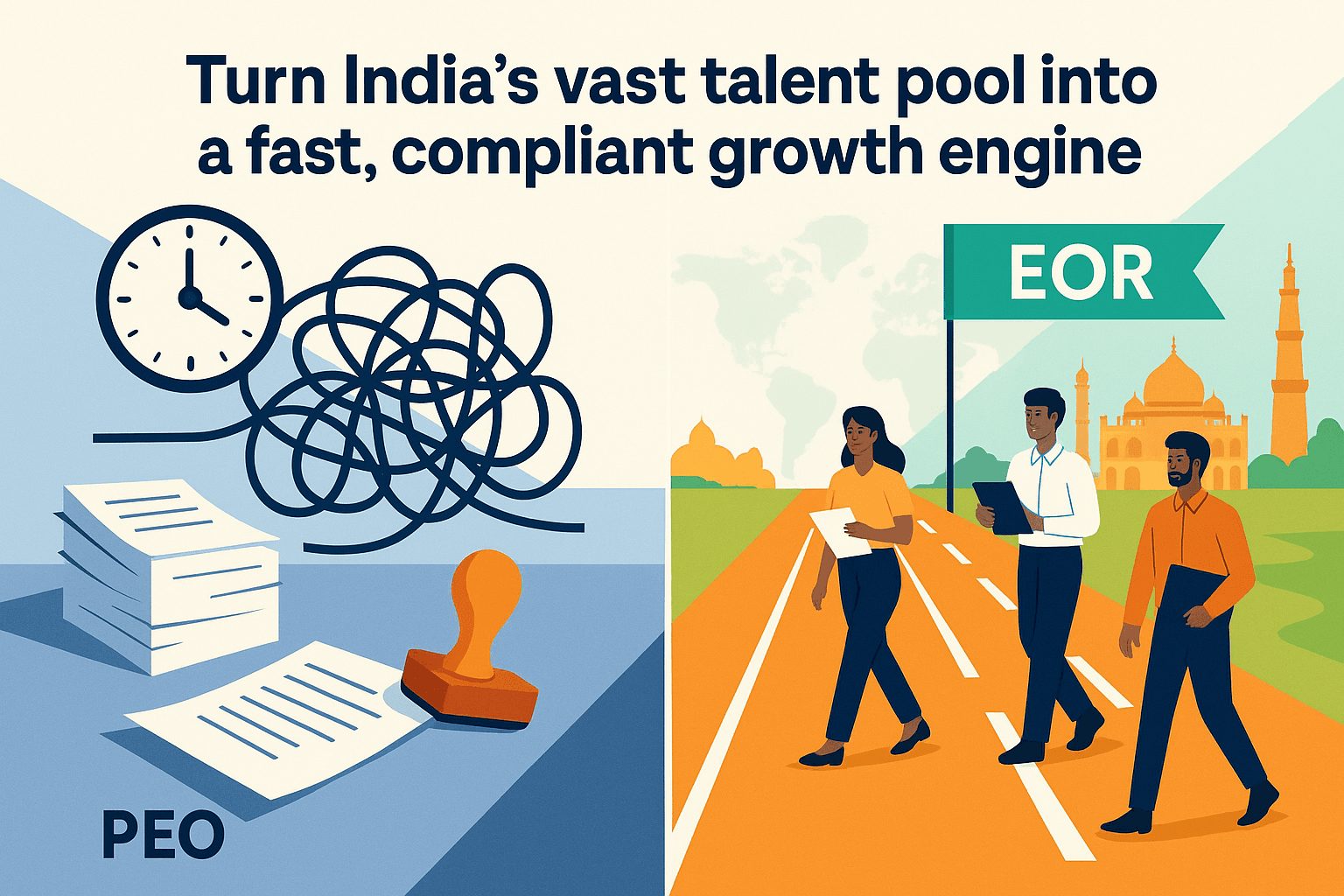
A Professional Employer Organization (PEO) co-employs workers alongside your company. It requires you to already have a registered legal entity in India. An EOR does not. The EOR holds the legal employment relationship entirely. This makes EOR the right structure for any US company that has not incorporated in India.
Why US Companies Are Hiring in India
India is not a fallback option. It is a deliberate hiring strategy for some of the most sophisticated technology companies in the world.
Here is why:
Talent at Scale
India produces more STEM graduates each year than almost any other country. 65% of its 1.3 billion population is under the age of 35. The active talent pipeline spans software engineering, data science, product management, UX design, digital marketing, finance, and operations.
The major hiring cities each have a distinct identity:
Significant Cost Savings
Indian compensation benchmarks are approximately one-third of their US equivalents for like-for-like roles. Kaamwork data puts the savings at around 65% on salaries when comparing Indian hires to equivalent US hires.
That is not because the talent is lower quality. It is because the cost of living and compensation norms in India are structured differently. Kaamwork's model pays market rate for Indian talent, which means you attract strong professionals, not budget hires.
Overhead Arbitrage
Beyond salary, the cost of running a compliant operation in India through an EOR is 80% lower than owning a legal entity. You avoid the HR, legal, tax, and finance infrastructure costs entirely.
Proven by Established Companies
TripAdvisor, SimpliSafe, Thrasio, Regie.AI, and Advance Auto Parts have all built teams in India through Kaamwork. Regie.AI, a VC-backed AI company, is building its entire global product from India through Kaamwork.
How EOR in India Works: The Kaamwork Process
Most EOR providers handle the paperwork. Kaamwork handles the full hiring journey. Here is how the process works from start to operational team:
Step 1: Define Objectives and Roles
Kaamwork starts with a structured intake process. This covers the roles you need, the skills and seniority required, compensation bands in INR, and the city or cities you want to hire in. This stage sets up everything that follows.
Step 2: Compliance Setup
Before the first hire, all employment infrastructure is activated. This includes employment contracts compliant with Indian labor law, payroll routing, and statutory benefit enrollment covering Provident Fund (PF), Employee State Insurance (ESIC), and Gratuity. Compliance is in place from Day One, not retroactively.
Step 3: Source and Hire Top Talent
Kaamwork sources candidates through a network of vetted recruiters connected to experienced professionals at top technology companies. Profiles are delivered within 24 hours of a role being confirmed. The interview-to-offer conversion rate is 65%, which reflects the quality of the shortlist, not just the volume.
Step 4: Secure Onboarding
Before Day One, hardware is provisioned, enterprise SSO and MFA are configured, and access controls are set up. Security protocols follow a strict joiner-mover-leaver framework to ensure your data and systems are protected from the moment an employee joins.
Step 5: Launch and Integrate
The team is embedded into your workflows, communication tools, sprint cycles, and culture. Kaamwork acts as the local face of your brand. Offer letters carry your company name and logo. Welcome kits are branded. The employee experience reflects your company, not a generic staffing firm.
Step 6: Optimize and Scale
Once the team is running, Kaamwork supports expansion through additional hires, proactive retention management, appraisal consulting, and offsite facilitation. Companies that eventually want to set up their own entity can do so through Kaamwork's Build-Operate-Transfer (BOT) model, which transitions the team and infrastructure to an owned entity when the time is right.
Most clients are live with an operational team in 4 to 8 weeks. Setting up a legal entity from scratch typically takes 6 months or more.
EOR vs. Setting Up a Legal Entity in India
This is the core question most US companies face when expanding to India. Both models give you full operational control over your team. The difference is in time, cost, and complexity.
The entity model makes sense when India is a long-term, high-headcount commitment, typically at 25 or more employees, and when your company is ready to invest in the infrastructure required to run one. For most US companies entering India or scaling a team below that threshold, EOR delivers better economics and far less operational friction.
Kaamwork's BOT model offers a middle path. Start with EOR, build and validate your India team, then transfer to your own entity when scale justifies it.
India Payroll and Compliance: What You Need to Know
Indian employment law operates at both the central and state level. Compliance requirements vary by state, salary band, and employee type. An EOR handles all of this on your behalf. But it helps to understand what is actually being managed.
Provident Fund (PF)
Both employer and employee contribute to the Employees' Provident Fund. PF is mandatory for employees earning below a defined salary threshold and is often extended to all employees by employers who want to attract strong talent.
Employee State Insurance Corporation (ESIC)
ESIC provides health and disability coverage. It is mandatory for employees below a defined monthly salary threshold. Contributions are split between employer and employee.
Gratuity
Gratuity is a statutory benefit payable to employees after five years of continuous service. It is calculated based on the employee's last drawn salary and the number of years worked.
Tax Deducted at Source (TDS)
Employers are required to deduct income tax from employee salaries each month and remit it to the government. TDS is calculated based on the employee's tax slab and salary structure.
Leave Policies and Labor Laws
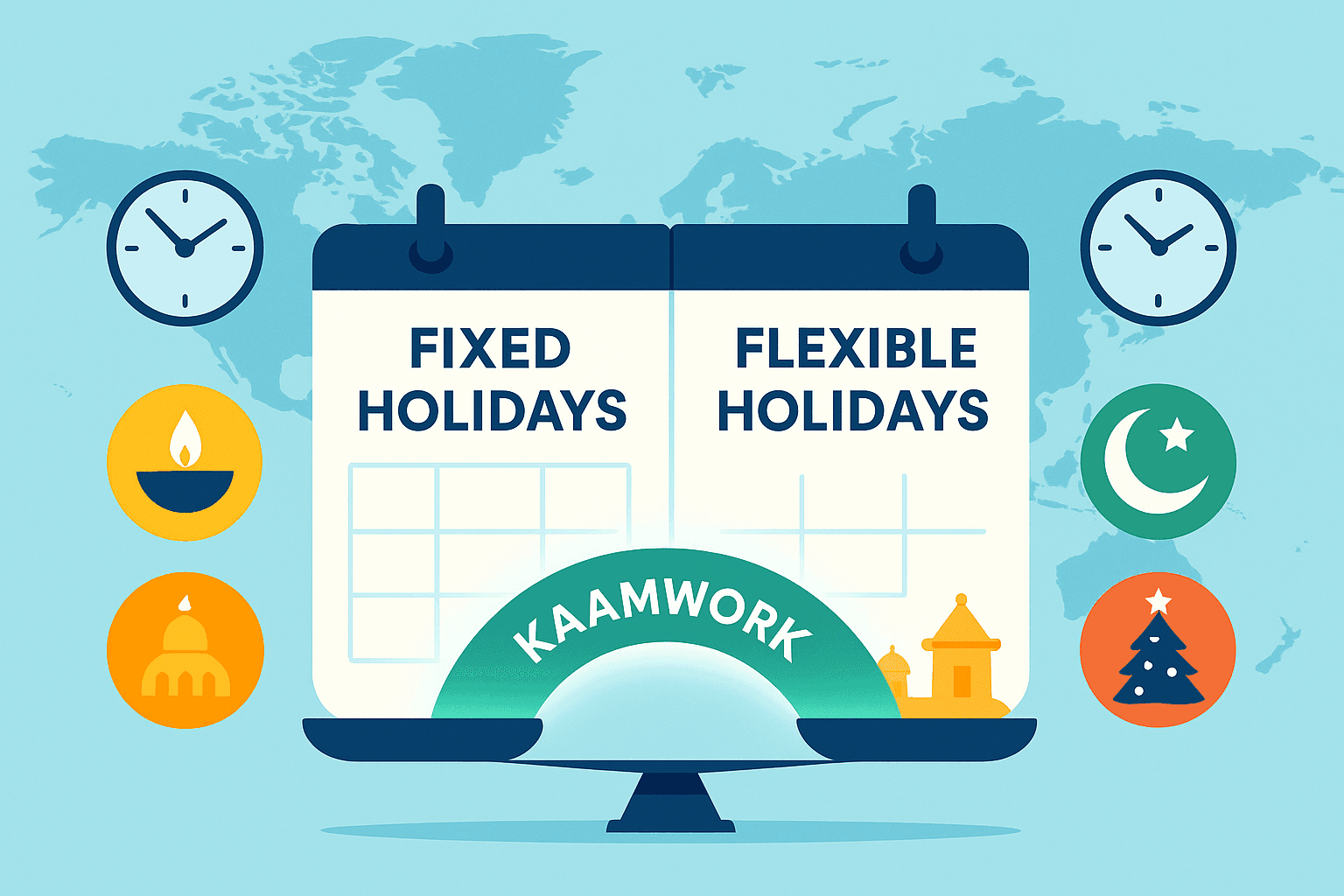
Annual leave, sick leave, casual leave, and public holidays are governed by state-specific Shops and Establishments Acts. The rules differ between Maharashtra, Karnataka, Delhi, and other states. An EOR with multi-state experience handles this automatically.
Medical Insurance
Kaamwork provides top-tier medical insurance covering employees and their families. This goes above statutory ESIC coverage and is positioned to match or exceed the benefits your employees in the US and other markets receive.
Additional Benefits Administration
Kaamwork's platform administers any supplementary benefits the client wants to offer. This includes Work From Home allowances, Learning and Development programs, Wellness support, and Travel benefits. The goal is equity across your global workforce. Your India team should not feel like a second-tier office.
Intellectual Property Protection
Every employment contract includes IP assignment clauses, non-disclosure terms, and invention assignment provisions aligned to US standards. Your technology, codebase, and proprietary methods are protected from Day One.
India's four new labor codes came into force in November 2025, replacing 29 legacy labor laws. Kaamwork stays current on all regulatory changes so your team does not have to.
What Makes Kaamwork Different from Standard EOR Providers
Most EOR providers are administrative platforms. They process payroll, manage filings, and issue contracts. That is the baseline. Kaamwork operates differently.
Talent-First Sourcing
Kaamwork does not wait for you to send candidates. The sourcing is active. Within 24 hours of a confirmed role, vetted profiles from experienced professionals at established technology companies are in your inbox. The talent comes from the top of the market, not from contractor directories.
Your Brand, Not Ours
Kaamwork acts as the local face of your company. Offer letters carry your logo. Welcome kits are branded. The candidate experience from first interview to Day One reflects your company culture, not a generic employer. This is deliberate. Strong professionals in India have options. They choose companies with a clear identity.
Retention-Focused HR Support
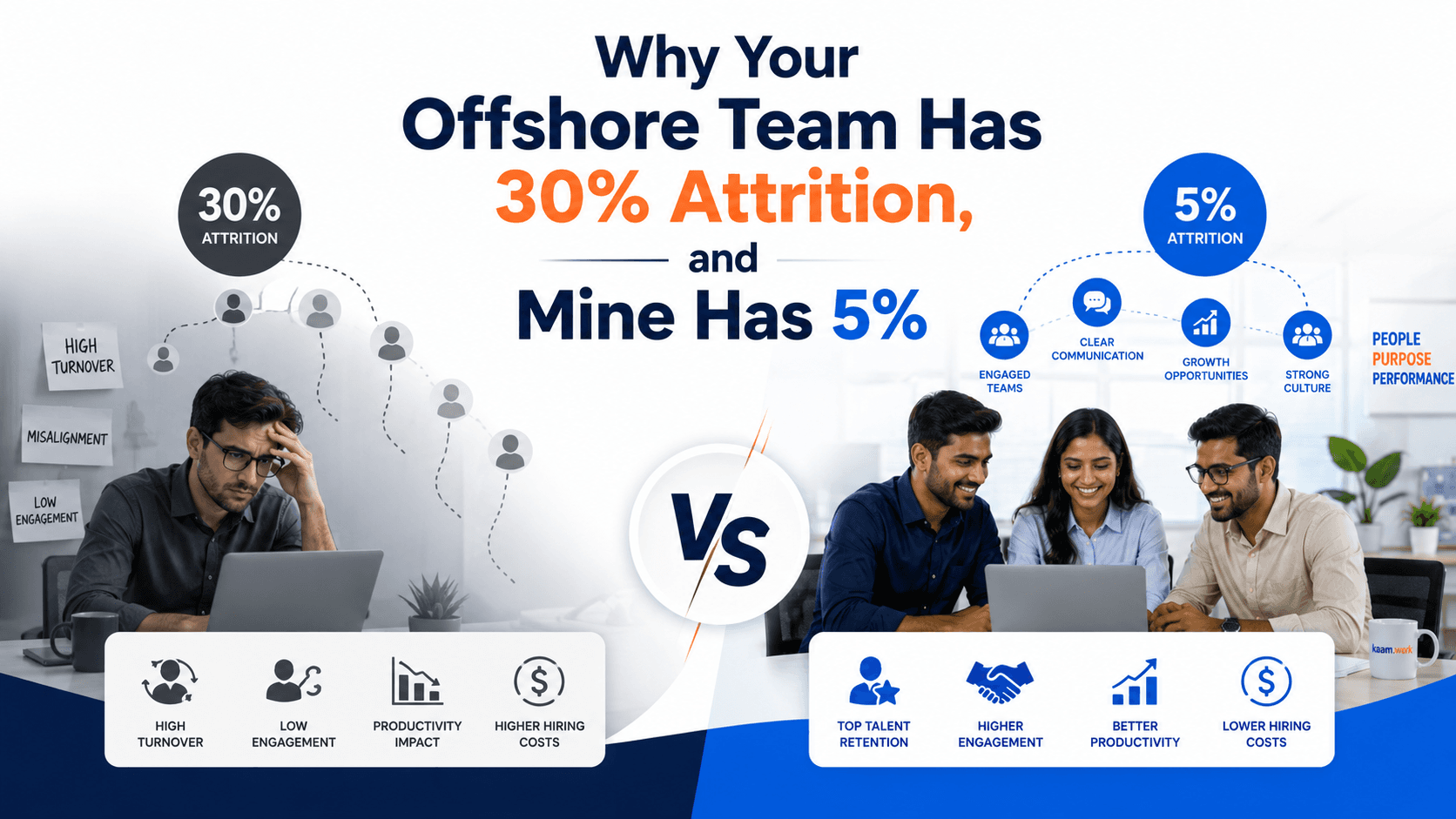
Kaamwork's attrition rate is below 5%. That does not happen by accident. The local HR team runs proactive feedback loops, facilitates team meetups and offsites, consults on appraisal cycles, and advises on market-rate adjustments. The team stays because the experience is good.
Enterprise Security from Day One
Every hire goes through a structured joiner protocol. Devices are provisioned and verified. SSO and MFA are configured. Access controls are set before the employee starts. The same security posture applies when an employee moves roles or exits. There are no gaps in the access management chain.
Transparent, Flat Pricing
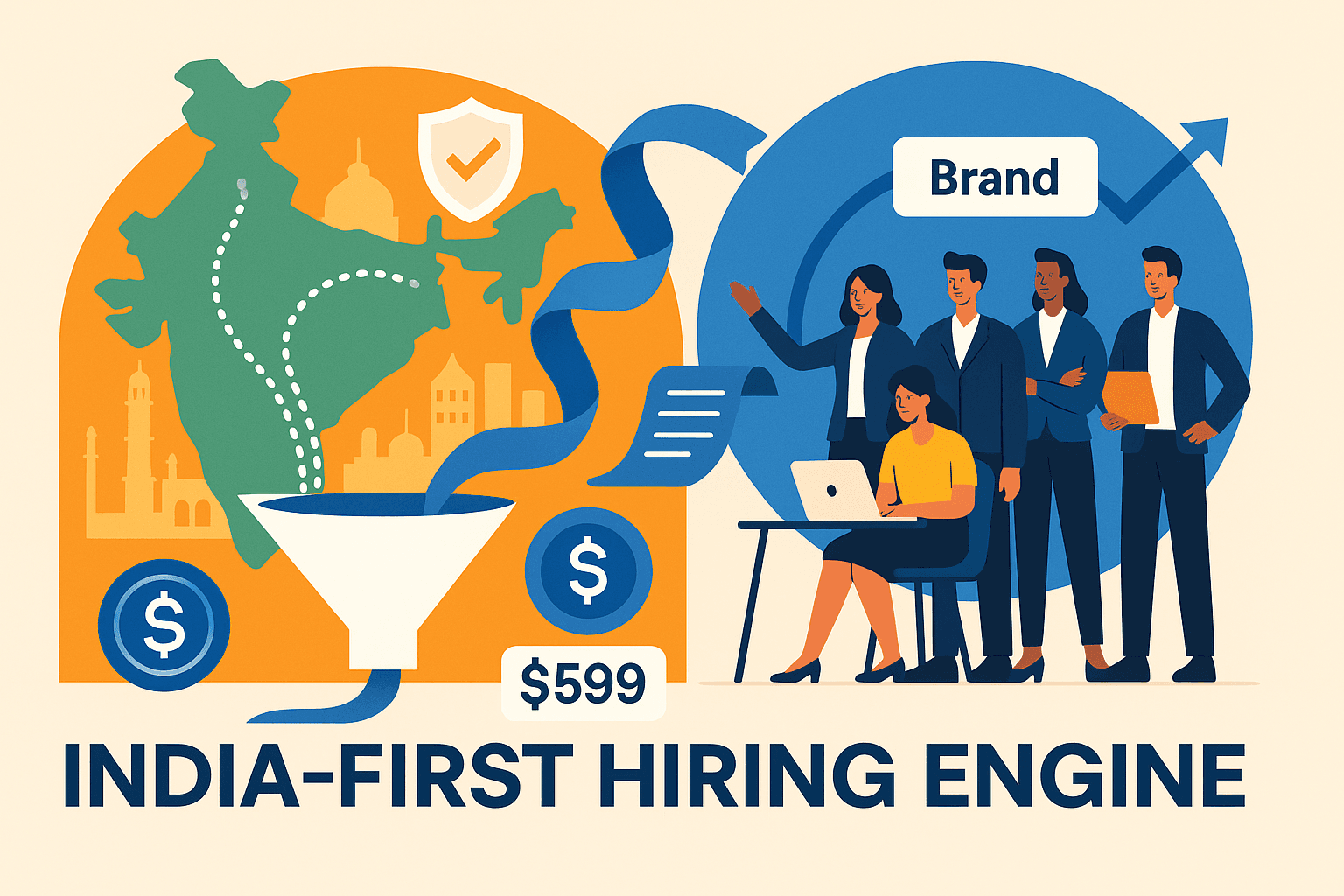
Kaamwork charges a flat fee of $599 per employee per month. There are no setup fees, no onboarding charges, and no variable costs buried in the bill at the end of the month. For global contractor management, the fee is $29 per contractor per month.
Add-ons are available and cross-charged on actuals. These include equipment and laptops, physical or hybrid workspace, detailed background checks, swag kits, offsites, medical insurance, and Learning and Development benefits.
Real Companies, Real Teams
Several companies have built high-performing India teams through Kaamwork. Here is what that looks like in practice:
· TripAdvisor: Built its India engineering and operations team from scratch without a local entity. Achieved 80% savings on overhead costs and was fully operational within weeks.
· Regie.AI: A VC-backed AI company building its entire global product from India through Kaamwork. The team operates as a core part of the product org, not a satellite office.
· Advance Auto Parts: Scaled on-demand expertise in data science and hard-to-hire technical disciplines without the delay of entity setup.
· Thrasio and SimpliSafe: Both companies scaled critical product and engineering functions through Kaamwork's direct employment model while avoiding local entity complexity.
Common Questions About EOR in India
Is using an EOR in India legal?
Yes. India does not have specific EOR legislation, but EOR providers operate within the country's existing legal framework. They are registered Indian companies that employ workers under compliant written employment contracts governed by Indian labor law. The structure is legally sound and widely used by global companies.
What is the difference between EOR and outsourcing?
Outsourcing transfers delivery responsibility to a third party. You hand over a function and receive an output. An EOR retains your people inside your team. You direct their work, set their goals, and manage their performance. The EOR only holds the legal employment relationship.
How long does it take to hire through Kaamwork?
Most clients have an operational team within 4 to 8 weeks. This includes role scoping, sourcing, interviewing, onboarding, and compliance setup. The comparable timeline for setting up a legal entity is 6 months or more.
Which engagement model should I choose?
Kaamwork offers three models:
· Dedicated Team: Best for continuous product development and long-term team building.
· Build-Operate-Transfer (BOT): Best for companies planning to eventually own a legal entity in India. Kaamwork builds and operates the team, then transfers it when you are ready.
How is intellectual property protected?
Every employment contract includes IP assignment, non-disclosure, and invention assignment clauses aligned to US standards. Your code, product, and proprietary methods are protected from the start.
What does the $599 per month fee cover?
The flat fee covers EOR services for all HR activities, payroll processing, tax and compliance management, company-branded onboarding, offer letters, welcome kit, basic background checks, and 24/7 support. Equipment, workspace, and supplementary benefits are available as add-ons cross-charged on actuals.
What happens if I want to transition to my own entity later?
Kaamwork's BOT model is built for this. Kaamwork manages the team under EOR while you validate the market and build the case for a permanent entity. When you are ready, Kaamwork manages the transition, including the transfer of employment relationships, compliance records, and operational infrastructure.
The Bottom Line
EOR in India gives US companies a direct path to one of the world's strongest talent markets without the cost, time, and operational weight of setting up a local entity.
Kaamwork's model goes beyond administrative processing. Active sourcing, branded onboarding, retention support, enterprise security, and transparent flat-fee pricing make it the right choice for companies that want to build a real team in India, not just run a payroll.
The average Kaamwork client is live with an operational team in 4 to 8 weeks. Most see an 80% reduction in overhead costs compared to running their own entity. Attrition stays below 5%.
If you are ready to build your India team, the first step is a conversation.
Talk to Kaamwork at kaam.work/talk-to-us
Share this article

Founder & CEO | Kaam.Work
Nilesh Parwani, a Kelley School BBA graduate, worked at UBS and Warburg Pincus before founding PrintBell (acquired by Cimpress). In 2020, he launched kaam.work, a remote work platform focused on flexible talent and distributed teams.